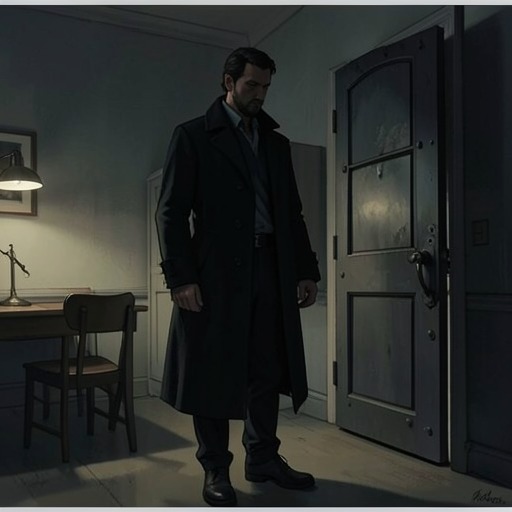
Lars Ågestam
Three SecondsLars Ågestam is a public prosecutor whose working relationship with Ewert Grens is marked first by deadlines and confrontation, then by a revelation that recasts the cases they have handled. Grens’s disclosure of 302 secret intelligence reports shows Ågestam how official prosecutions were conducted without information held in a parallel system. The discovery makes him more than a procedural obstacle: he is both implicated in the effects of institutional concealment and positioned to act once he understands its scale.
Role and working relationship
Ågestam appears in the investigation as a prosecutor with authority to demand progress and reduce the scope of a case. He gives Grens three days to identify remaining names connected to Västmannagatan, warning that he will scale the case down if the investigation produces nothing. Grens resists, insisting that the team has followed Ågestam’s own suggestion by identifying and questioning peripheral figures. One lead remains: Piet Hoffmann, already imprisoned and then in the prison hospital unit, where investigators cannot readily reach him.
Their meetings carry a history of friction. Ågestam’s visits to Grens’s office have been tense; the room seems associated with an occupant who tries to repel and hurt him, and Ågestam leaves quickly rather than linger in its stale atmosphere. Yet the conflict is not simply a contest between a cautious prosecutor and an obstinate detective. Ågestam sets limits on what the investigation can pursue, while Grens believes the unresolved lead matters enough to resist those limits. Their professional disagreement therefore governs the pace and permitted scope of the murder inquiry.
The Västmannagatan deadline
When Ågestam returns to the case, he makes the deadline concrete: Grens has four days to question Hoffmann and either link him to the crime or accept that the investigation will be scaled down. Grens calls Hoffmann interesting because something about him does not fit. The suspicion is enough to keep the lead alive, but not yet enough to satisfy the prosecutor’s demand for a connection to the murder.
The exchange shows the practical pressure Ågestam exerts over the investigation. He does not dismiss Grens’s theory outright; he grants a short extension for the final interview. But his permission is conditional, and time is part of the condition. The resulting tension places Hoffmann between two systems: the prison that controls his access and movement, and the investigation that must establish whether he belongs in the murder case at all. Ågestam’s deadline makes that uncertainty consequential for Grens’s next steps.
A personal opening
A brief exchange about a cemetery interrupts the hostility between the two men. Grens asks whether Ågestam has been there, then explains that two of his relatives are buried there and asks whether it is nice. Ågestam has never seen Grens so small. The question does not resolve their professional conflict, but it briefly changes its register: Grens reaches toward a personal subject, and Ågestam witnesses a vulnerability at odds with the detective’s usual manner in their meetings.
Later, Grens urgently asks Ågestam to meet by Monday morning, saying that what he needs to tell him is as much for Ågestam’s sake as his own. He acknowledges how strange it feels to say that to him. A woman’s voice can be heard in the background, but the scene does not identify her or explain the circumstances. Ågestam listens. The urgency marks a turn in their relationship: the prosecutor is no longer merely the person imposing a deadline; he is someone Grens believes needs to know what has been hidden.
The parallel record
Grens shows Ågestam that the same addresses and times in official case material can be accompanied by a different account in secret intelligence reports. One example concerns a serious drug offense in a parking lot on Regeringsgatan. The report describing what actually happened was written by a police officer who was not part of the official investigation. Grens then points out that this is only three of 302 cases from the previous year.
The reports expose a divided account of police work: an official investigation that could be used to solve one crime, and confidential intelligence records withheld from the investigators and prosecutors handling another. Grens tells Ågestam that cases had been swept under the carpet so other crimes could be solved. The concealed information had not merely been absent from the file; its absence shaped what the official process could establish and present.
Ågestam learns that he was involved in twenty-three of the cases in which prosecutions failed. Grens says he closed them without the information contained in the secret reports—the information that could have implicated the informant. The revelation places Ågestam inside the consequences of the system without establishing that he knew the information was being withheld. His professional decisions had been made on an incomplete record, and the hidden reports make that incompleteness visible.
Decision and consequence
After Grens presents the reports, Ågestam acknowledges that he received 302 of them: accounts of what had actually happened that other investigators did not know and therefore could not use in their official cases. The admission connects the broad institutional disclosure to Ågestam personally. He is not only shown examples; he recognizes his own involvement in the flow of secret material and the gap between those reports and the prosecutions he conducted.
The relationship reaches a different practical outcome when Ågestam tells Grens to bring the suspects in and says he will arrange the arrest warrants within three days. That decision contrasts with his earlier threats to scale down the Västmannagatan investigation. The evidence does not specify the complete legal resolution of the exposed cases, but it does show Ågestam responding to the revelation with an immediate prosecutorial action. His trajectory is defined by that shift: from enforcing the limits of an investigation to authorizing arrests after Grens makes the hidden record impossible to ignore.